
Salt Air Corrosion and Wind Uplift: Roofing Standards for Delaware Coastlines
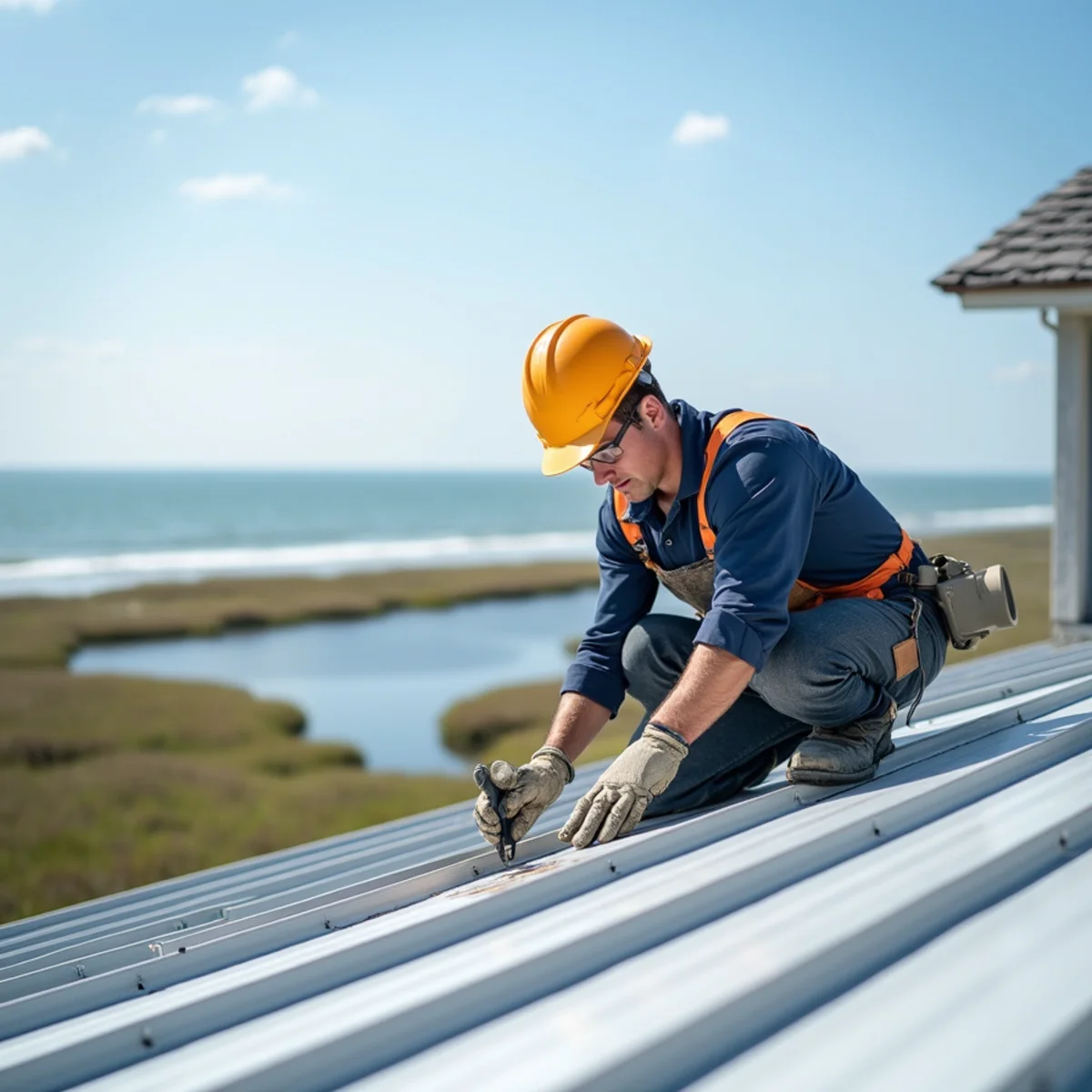
The Danger of Salt Air Oxidation on Fasteners and Flashing
Within 5 miles of the coast, ocean spray generates microscopic airborne salt crystals that settle on roofs. Standard electro-galvanized roofing nails corrode rapidly in this environment, rusting through beneath shingles and causing wind blow-offs during moderate gusts.
For coastal Delaware installations, Perfect Peak Exteriors utilizes hot-dipped galvanized or 304/316 stainless steel fasteners, aluminum or copper flashings, and PVDF/Kynar-coated metal panels engineered to resist salt-fog corrosion for decades.
Wind Uplift Dynamics in Open Coastal Zones
Coastal winds encounter zero friction over the open water of Delaware Bay before slamming into shoreline homes. We utilize high-wind 6-nail fastening patterns and specialized starter strips with enhanced thermal adhesives certified to withstand 130 to 150 MPH hurricane-grade gusts.
Electrolytic Corrosion & Fastener Degradation Along Coastal Bays
Airborne salt particles from Delaware Bay and coastal marshes settle on roof surfaces, creating a mildly conductive electrolyte solution when mixed with morning dew. This accelerates galvanic corrosion between dissimilar metals, such as steel nails in contact with aluminum drip edge.
For properties within 10 miles of the coast, we specify electro-galvanized or stainless steel ring-shank nails and heavy-duty polymer underlayment to prevent premature fastener failure.
Class F 130 MPH Wind Ratings and 6-Nail Fastening Protocols
Standard shingle installation guidelines call for a 4-nail pattern, which is only rated to 110 MPH. However, Delaware coastal Nor'easters and tropical depressions routinely produce sustained gusts exceeding that threshold.
By applying an enhanced 6-nail per shingle pattern and securing shingles along the designated manufacturer nail strip, we upgrade shingle wind resistance to a full 130 MPH Class F wind warranty.
Professional Trade Insights & Delmarva Environmental Tradeoffs
In Central and Southern Delaware, roofing systems face a unique combination of coastal humidity, subtropical summer UV exposure, and intense winter freeze-thaw cycles. When assessing repairs versus replacements, keep these crucial trade realities in mind:
Salty moisture from Delaware Bay and coastal inlets accelerates corrosion on exposed fastener heads and thin aluminum coil stock. Always specify stainless or electro-galvanized ring-shank fasteners and minimum 26-gauge flashing.
Unventilated Dover attics reach 140°F+ in July, baking the asphalt underside and driving out organic volatiles. Proper 50/50 soffit-to-ridge vent balance is non-negotiable to maintain shingle warranties.
Central Delaware Seasonal Roof Maintenance Schedule
Kent & Sussex CountiesInspect valleys for winter ice damage, clear gutters of seed pods, and check attic rafters for winter moisture staining.
Examine plumbing boot collars for UV cracking and verify that tree limbs are trimmed at least 10 feet from roof gables.
Clean downspouts completely, inspect chimney mortar joints, and confirm ridge vent caps are firmly anchored against 60 mph gusts.
Monitor eave perimeters for ice dam formations and ensure attic insulation does not block soffit intake baffles.
Delaware Residential Roofing Code & Fastener Standards (IRC R905)
Residential roofing across Central Delaware is governed by the International Residential Code (IRC) and local Kent County municipal amendments. Because Delaware sits squarely in the Atlantic coastal wind corridor, strict engineering benchmarks apply to all roof repairs and complete replacements:
| Code Specification | Delaware Standard (IRC R905) | Perfect Peak Exteriors Best Practice |
|---|---|---|
| Wind Uplift Rating | ASTM D3161 Class F (110 MPH) | Class H (130 MPH) 6-nail high-wind fastening pattern |
| Ice & Water Barrier | 24 inches inside exterior wall line | 36-inch self-adhering polymer membrane along eaves and valleys |
| Decking Attachment | 8d common nails at 6" edge / 12" field | Ring-shank exterior fasteners resistant to coastal humidity withdrawal |
| Attic Net Free Vent Area | 1 sq ft per 150 sq ft attic space | Balanced 50/50 continuous soffit intake and ridge vent exhaust |
| Flashing Gauge | 0.019-inch corrosion-resistant metal | 0.024-inch heavy-duty baked enamel aluminum and 16 oz copper |
Adhering to these strict building codes ensures your roof withstands hurricane-force nor'easters, prevents insurance claim rejections, and maintains full lifetime manufacturer warranty coverage.
Summary: Protecting Your Delaware Home
Whether you are addressing an active emergency leak, budgeting for a comprehensive roof replacement, or scheduling seasonal preventative maintenance, taking proactive steps today prevents thousands of dollars in hidden attic structural damage. Delmarva's intense coastal weather requires experienced local craftsmanship, premium materials, and certified installation standards that adhere to Delaware building codes.
At Perfect Peak Exteriors, our Dover-based team provides honest evaluations, clear digital photo evidence, and zero-obligation inspections across Kent, New Castle, and Sussex counties. If you have questions about your roof's condition, call our local team today at (855) 705-1940 or request your free 21-point roof audit online.
Recommended Delaware Services & Local Areas Mentioned
For professional execution of the methods discussed in this guide, explore our certified services and local Dover dispatch areas:
Common Questions About This Topic
Expert answers from our Delaware roofing contractors.
Yes! 24-gauge standing seam steel with Kynar 500 coating or marine-grade aluminum panels offer the ultimate corrosion resistance and wind uplift ratings for oceanfront properties.
Family-owned roofing contractor based in Dover, DE. Delivering honest estimates, storm repairs, and complete exterior restoration across Kent, New Castle, and Sussex counties for over 10 years.