
Commercial Property Exterior Maintenance: Managing Flat Roof Drainage & Parapets
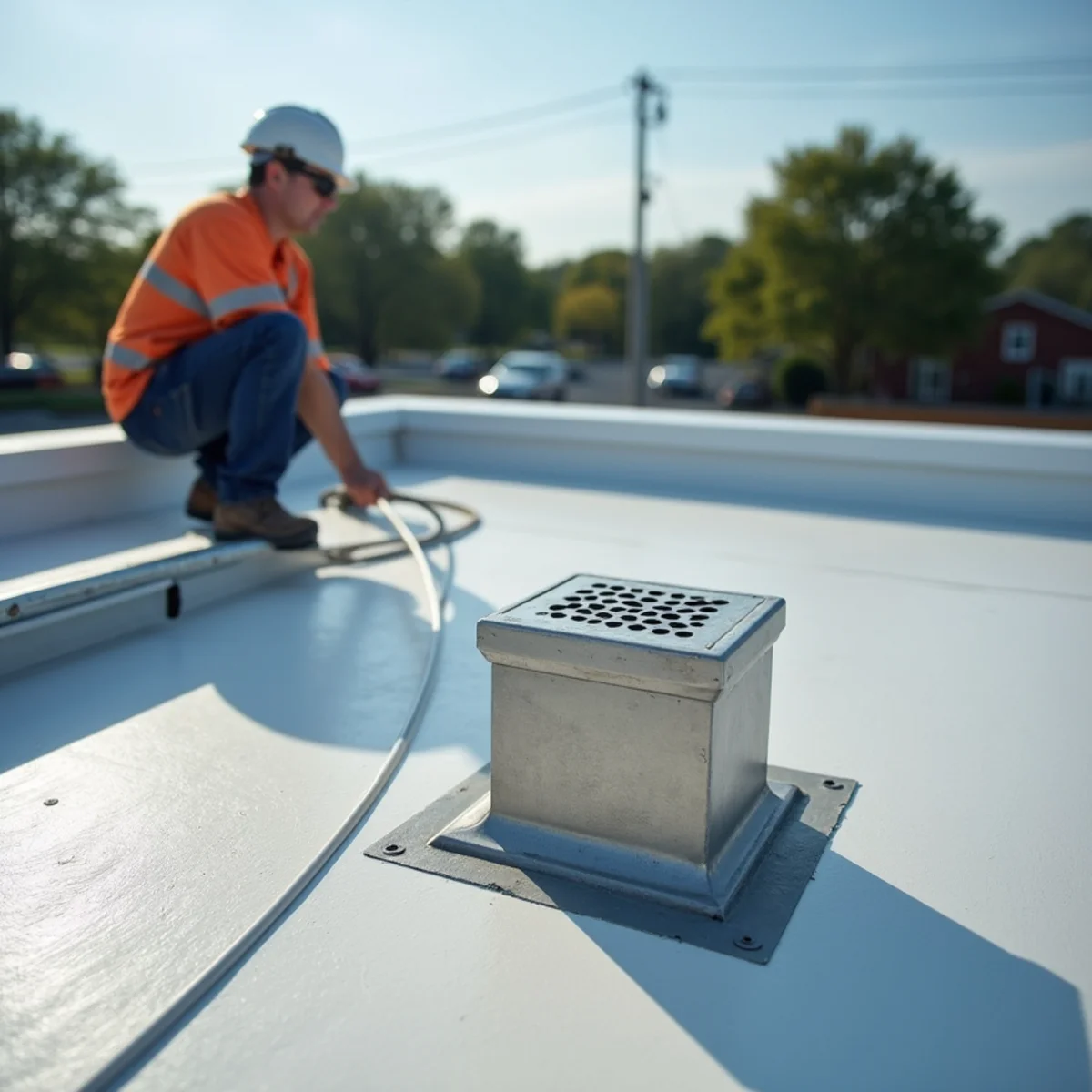
Optimizing Flat Roof Drainage and Internal Drain Bowls
Commercial flat roofs rely on scuppers, conductor heads, and internal cast-iron roof drains to move thousands of gallons of stormwater. When drain clamping rings crack or strainer domes become clogged with bird debris, water pools across commercial spans.
Routine cleaning of drain strainers and regular dye testing of internal drain seals ensures your drainage system operates at full capacity during sudden summer cloudbursts.
Parapet Coping Metal and Masonry Movement Joints
Parapet walls extending above the roof surface expand and contract at different rates than the steel or concrete roof deck. If metal coping caps lack continuous cleat fastening or expansion joints are unsealed, wind-driven rain penetrates the parapet core, degrading exterior brickwork and commercial drywall.
Internal Roof Drains vs. Perimeter Scuppers on Commercial Buildings
Commercial flat roofs in Dover utilize either internal cast-iron roof drains or exterior parapet scuppers. Internal drain systems must be equipped with cast-iron debris strainers to prevent autumn leaves from clogging vertical drain pipes inside building walls.
If an internal drain clogs, thousands of gallons of rainwater accumulate on the commercial membrane, causing immense structural deflection and catastrophic ceiling collapses.
HVAC Rooftop Unit (RTU) Curb Flashing and Vibration Fatigue
Rooftop HVAC package units run continuously during Delaware summers, creating persistent mechanical vibration. This continuous micro-movement stresses the roofing membrane flashings sealed around the equipment curb.
Commercial maintenance agreements include quarterly inspections of RTU curb corners, pipe pitch pans, and expansion joints to reseal elastomeric mastic before vibration leaks damage commercial tenant spaces.
Professional Trade Insights & Delmarva Environmental Tradeoffs
In Central and Southern Delaware, roofing systems face a unique combination of coastal humidity, subtropical summer UV exposure, and intense winter freeze-thaw cycles. When assessing repairs versus replacements, keep these crucial trade realities in mind:
Salty moisture from Delaware Bay and coastal inlets accelerates corrosion on exposed fastener heads and thin aluminum coil stock. Always specify stainless or electro-galvanized ring-shank fasteners and minimum 26-gauge flashing.
Unventilated Dover attics reach 140°F+ in July, baking the asphalt underside and driving out organic volatiles. Proper 50/50 soffit-to-ridge vent balance is non-negotiable to maintain shingle warranties.
Central Delaware Seasonal Roof Maintenance Schedule
Kent & Sussex CountiesInspect valleys for winter ice damage, clear gutters of seed pods, and check attic rafters for winter moisture staining.
Examine plumbing boot collars for UV cracking and verify that tree limbs are trimmed at least 10 feet from roof gables.
Clean downspouts completely, inspect chimney mortar joints, and confirm ridge vent caps are firmly anchored against 60 mph gusts.
Monitor eave perimeters for ice dam formations and ensure attic insulation does not block soffit intake baffles.
Delaware Residential Roofing Code & Fastener Standards (IRC R905)
Residential roofing across Central Delaware is governed by the International Residential Code (IRC) and local Kent County municipal amendments. Because Delaware sits squarely in the Atlantic coastal wind corridor, strict engineering benchmarks apply to all roof repairs and complete replacements:
| Code Specification | Delaware Standard (IRC R905) | Perfect Peak Exteriors Best Practice |
|---|---|---|
| Wind Uplift Rating | ASTM D3161 Class F (110 MPH) | Class H (130 MPH) 6-nail high-wind fastening pattern |
| Ice & Water Barrier | 24 inches inside exterior wall line | 36-inch self-adhering polymer membrane along eaves and valleys |
| Decking Attachment | 8d common nails at 6" edge / 12" field | Ring-shank exterior fasteners resistant to coastal humidity withdrawal |
| Attic Net Free Vent Area | 1 sq ft per 150 sq ft attic space | Balanced 50/50 continuous soffit intake and ridge vent exhaust |
| Flashing Gauge | 0.019-inch corrosion-resistant metal | 0.024-inch heavy-duty baked enamel aluminum and 16 oz copper |
Adhering to these strict building codes ensures your roof withstands hurricane-force nor'easters, prevents insurance claim rejections, and maintains full lifetime manufacturer warranty coverage.
Summary: Protecting Your Delaware Home
Whether you are addressing an active emergency leak, budgeting for a comprehensive roof replacement, or scheduling seasonal preventative maintenance, taking proactive steps today prevents thousands of dollars in hidden attic structural damage. Delmarva's intense coastal weather requires experienced local craftsmanship, premium materials, and certified installation standards that adhere to Delaware building codes.
At Perfect Peak Exteriors, our Dover-based team provides honest evaluations, clear digital photo evidence, and zero-obligation inspections across Kent, New Castle, and Sussex counties. If you have questions about your roof's condition, call our local team today at (855) 705-1940 or request your free 21-point roof audit online.
Recommended Delaware Services & Local Areas Mentioned
For professional execution of the methods discussed in this guide, explore our certified services and local Dover dispatch areas:
Common Questions About This Topic
Expert answers from our Delaware roofing contractors.
Commercial roofs should undergo formal inspections twice a year (spring and fall) plus immediately following any major severe storm or hurricane warning.
Family-owned roofing contractor based in Dover, DE. Delivering honest estimates, storm repairs, and complete exterior restoration across Kent, New Castle, and Sussex counties for over 10 years.